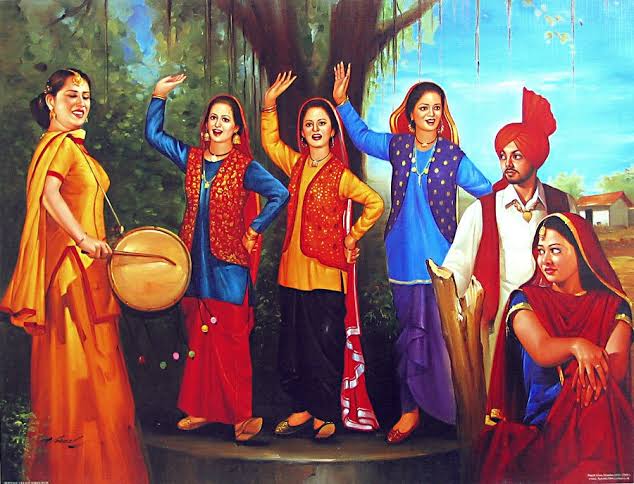
Punjabi Bhangra & Dhrees
Punjabi Bhangra and Dharees hold significant cultural importance in Pakistan, particularly in the Punjab province where they originate. Bhangra, a lively and energetic dance form, is deeply ingrained in the cultural fabric of Punjab. Accompanied by the rhythmic beats of the dhol (a traditional drum), Bhangra is performed during various celebrations and festivities, including weddings, harvest festivals like Baisakhi, and cultural events. The dance is characterized by vibrant movements, high energy, and synchronized footwork, often performed in groups with colorful traditional attire adding to the spectacle. Dharees, on the other hand, are traditional folk songs sung in the Punjabi language. These songs typically narrate tales of love, valor, and rural life, often accompanied by simple musical instruments like the dholak (handheld drum) or the chimta (tongs). Dharees are an integral part of Punjabi culture, passed down through generations orally, and are performed during gatherings, weddings, and other communal events. They evoke a sense of nostalgia and pride in Punjabi heritage. Both Bhangra and Dharees play a vital role in preserving and promoting Punjabi culture in Pakistan, serving as expressions of joy, unity, and cultural identity for the people of the region. They continue to thrive and evolve, serving as enduring symbols of Punjab's rich cultural heritage.