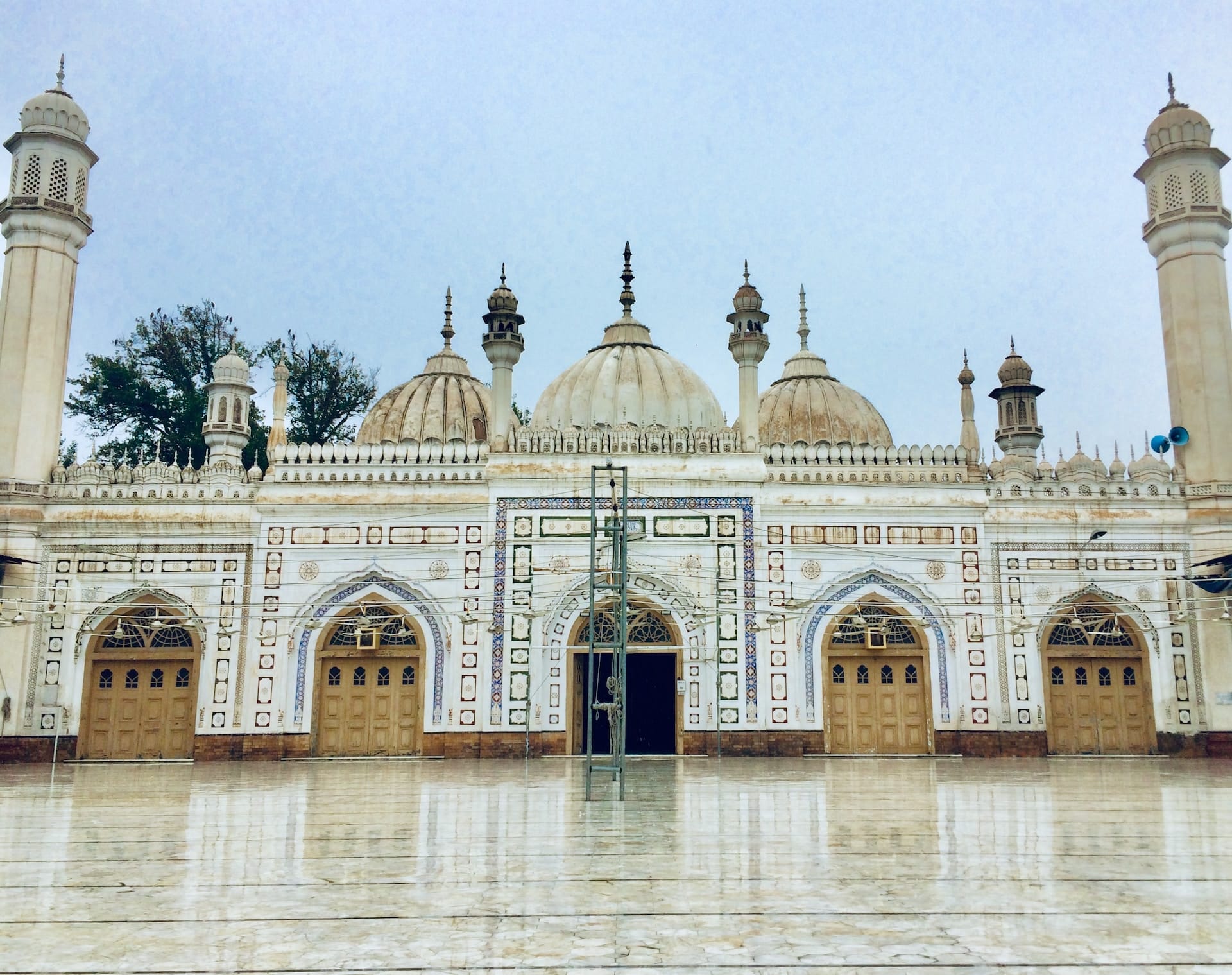
Mahabat Khan Mosque
The Mahabat Khan Mosque is a historic mosque located in the heart of Peshawar, the capital city of Khyber Pakhtunkhwa (KPK), Pakistan. Built-in the 17th century during the Mughal era, the mosque is renowned for its exquisite architecture, intricate artwork, and cultural significance. Named after Mahabat Khan, the governor of Peshawar under Emperor Shah Jahan, the mosque is a masterpiece of Mughal architecture, characterized by its grand entrance, spacious courtyard, and ornate domes and minarets. The facade of the mosque is adorned with intricate floral motifs, geometric patterns, and Quranic inscriptions, showcasing the skill and craftsmanship of the artisans who built it. The interior of the Mahabat Khan Mosque is equally impressive, with a prayer hall adorned with frescoes, marble pillars, and a beautifully carved wooden mihrab (prayer niche) facing towards Mecca. The mosque's central courtyard is surrounded by arched galleries, marble pavilions, and a serene reflecting pool, creating a tranquil oasis amidst the bustling city. The Mahabat Khan Mosque serves as not only a place of worship but also a cultural and architectural landmark, attracting visitors from far and wide who come to marvel at its beauty, learn about its history, and experience the spiritual serenity of its sacred spaces. It stands as a testament to the enduring legacy of Mughal architecture and the rich cultural heritage of Khyber Pakhtunkhwa (KPK), Pakistan.