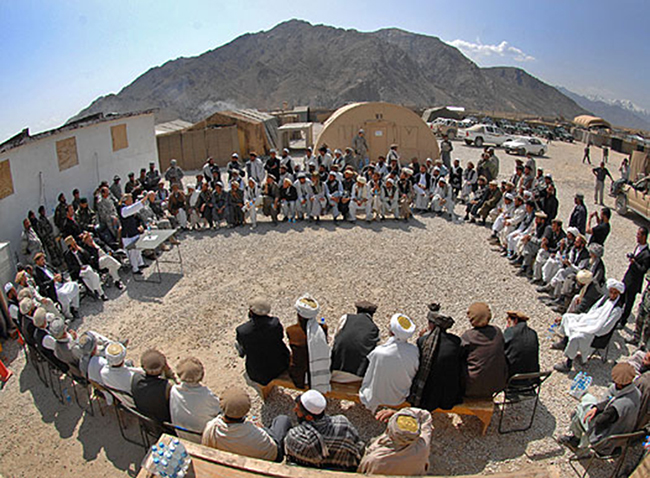
Jirga
Jirga is a traditional system of conflict resolution and governance practiced in the tribal regions of Pakistan, including Khyber Pakhtunkhwa (KPK), Balochistan, and the Federally Administered Tribal Areas (FATA). Rooted in Pashtunwali, the ancient code of conduct of the Pashtun people, Jirga embodies principles of justice, equality, and consensus-building. A Jirga typically consists of respected elders and leaders from the community who come together to resolve disputes, settle grievances, and make decisions on matters of social, legal, and political importance. The proceedings are conducted in an informal setting, often under a tree or in a communal gathering space, where participants engage in dialogue, negotiation, and mediation to reach a consensus. Jirga decisions are binding and enforceable, reflecting the collective wisdom and authority of the community. They are based on principles of fairness, impartiality, and mutual respect, with an emphasis on preserving harmony and restoring peace within the community. In addition to conflict resolution, Jirga plays a vital role in governance, with tribal leaders and elders serving as mediators, advisors, and representatives of their communities in matters of law, administration, and justice. Despite modernization and legal reforms, Jirga continues to be a central institution in many tribal societies, embodying the resilience, autonomy, and cultural identity of the Pashtun people